
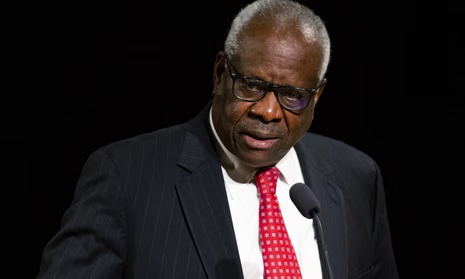
The debate over Clarence Thomas is no longer confined to legal circles. It has become a broader test of how much ethical ambiguity the public will tolerate from the nation’s highest court.
Undisclosed gifts and the ethics disclosure problem
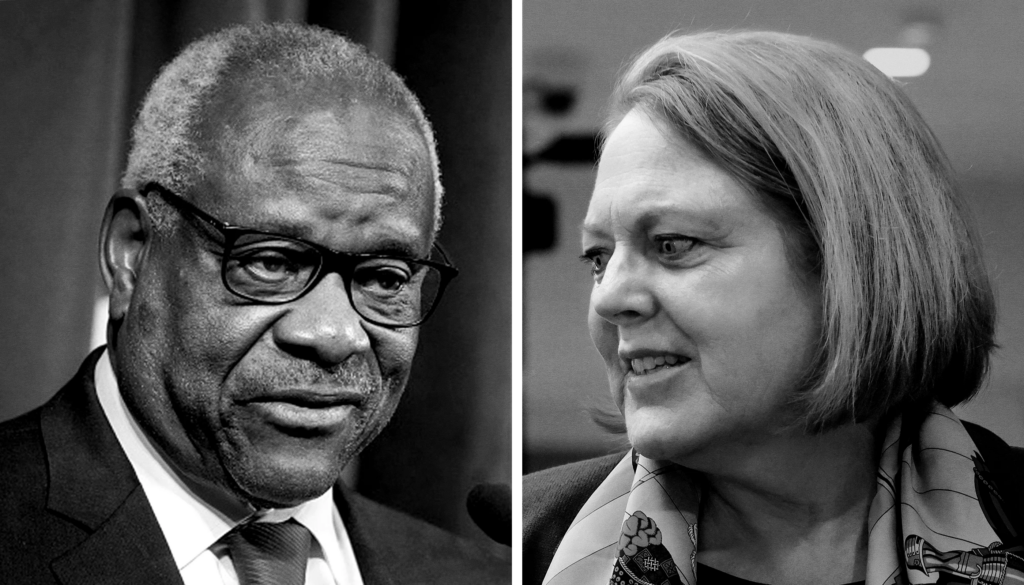
The most persistent controversy surrounding Justice Clarence Thomas involves years of benefits he did not report on federal financial disclosure forms. Reporting by ProPublica brought national attention to luxury vacations, private jet travel, yacht trips, and stays at properties tied to Texas businessman Harlan Crow, a Republican donor and longtime Thomas friend. Those revelations prompted a wave of criticism because federal disclosure rules are designed to show the public whether judges may be receiving valuable benefits from people with interests before the courts or in politics more broadly.
Thomas said he had been advised that certain personal hospitality from close friends did not need to be disclosed. That explanation immediately became a focal point of the debate, because ethics experts argued that repeated high-value travel and accommodations stretched the ordinary meaning of friendship and hospitality far beyond what the public would consider routine. The issue was not simply whether Thomas broke a technical rule in a single instance, but whether a long pattern of omission deprived the public of information that is supposed to support trust in judicial independence.
The scrutiny widened when additional reports described Crow’s purchase of properties connected to Thomas’s family, including the Georgia home where Thomas’s mother has lived. Critics argued that real estate transactions involving a wealthy benefactor should have been plainly disclosed. Thomas later amended some financial disclosure forms, but by then the controversy had evolved into a larger institutional problem: unlike lower federal judges, Supreme Court justices face no outside enforcement mechanism with meaningful consequences when disclosure failures are discovered.
That gap helped turn Thomas’s personal controversy into a structural one for the court itself. Chief Justice John Roberts declined a Senate invitation to testify about ethics concerns, but the court later adopted a code of conduct in 2023 after mounting pressure from lawmakers, watchdog groups, and the press. Even so, many specialists said the code lacked strong enforcement provisions and did little to settle doubts raised by Thomas’s case. For many Americans, the central question remains straightforward: if ordinary public officials must disclose expensive gifts and travel, why should a Supreme Court justice operate under standards that appear more forgiving?
Luxury travel, benefactors, and what counts as influence
The political force of the Thomas controversy comes from the scale and character of the gifts at issue. Reports described travel that most Americans could never afford, including flights on private aircraft and voyages on a superyacht, all linked to a billionaire with extensive ideological and political relationships. Even absent a direct case before the court involving Crow, ethics scholars have emphasized that the appearance of indebtedness can be damaging in itself, because judges are expected to avoid not only impropriety but also the appearance of impropriety.
Supporters of Thomas have argued that friendship should not be criminalized and that no evidence has shown Crow bought judicial outcomes. That defense matters, because proof of a quid pro quo is the sharpest allegation one could make. But public ethics rules often exist precisely because influence is rarely explicit. Access, familiarity, repeated generosity, and social immersion among affluent political networks can produce subtler pressures that are difficult to measure yet corrosive to confidence in impartial decision-making.
The controversy also revived older concerns about the financial and social insulation of Supreme Court justices. Unlike elected officials, justices serve for life and are largely protected from ordinary political accountability. Unlike lower court judges, they answer to no higher judicial body. That combination means the public often learns about questionable conduct only through investigative journalism, and reform comes slowly, if at all. According to many former judges and ethics lawyers, that is why disclosure rules are not a trivial paperwork exercise but one of the few practical tools available to monitor integrity at the top of the judiciary.
What made the Thomas episode especially potent was timing. It emerged at a moment when public confidence in the Supreme Court had already fallen because of major rulings on abortion, guns, and administrative power, along with earlier controversy over the leak of the Dobbs draft opinion. In that climate, lavish undisclosed benefits looked less like isolated oversights and more like evidence of a court that had grown comfortable operating without enough transparency. The result was not only damage to Thomas’s reputation, but another hit to the court’s legitimacy as an institution that depends on public acceptance of its neutrality.
Ginni Thomas, political activism, and conflict-of-interest concerns

A separate but closely related line of controversy involves Virginia “Ginni” Thomas, the justice’s wife, and her active role in conservative politics. Ginni Thomas has long been involved with advocacy groups and ideological networks in Washington, but scrutiny intensified after the 2020 election. Records and testimony showed that she had communicated with Trump White House chief of staff Mark Meadows and urged efforts to challenge Joe Biden’s victory, placing her near the center of political efforts tied to the election’s aftermath.
Those facts triggered calls for Justice Thomas to recuse himself from cases connected to the election and the January 6 attack on the Capitol. The most cited example came when the Supreme Court allowed the release of Trump White House records to the House committee investigating January 6, with Thomas the lone dissenter. That vote immediately fueled concern because the records in question could have touched on matters related to his wife’s political activism. Even without proof that he acted to protect her, critics argued that the overlap created a glaring appearance problem.
Thomas has maintained that he and his wife have independent professional lives and separate views on many matters. That principle is important and, in one sense, legally and morally sound: spouses do not lose their own political rights because one partner serves on the court. Yet recusal standards are not limited to actual bias. They also ask whether a justice’s impartiality might reasonably be questioned, and many former ethics officials have said the Ginni Thomas episode falls squarely within that zone of concern.
The broader issue is how the Supreme Court should handle family-related conflicts in an era of hyper-partisan advocacy and dark-money politics. If a justice’s spouse is politically active, financially connected, or lobbying around issues that may come before the court, public confidence can erode quickly unless there is robust transparency and a credible recusal process. Clarence Thomas’s controversies therefore extend beyond one justice’s disclosures or one couple’s political entanglements. They have become a case study in why the nation’s most powerful judges face growing demands for clearer rules, independent oversight, and a standard of ethics that matches the authority they wield.