
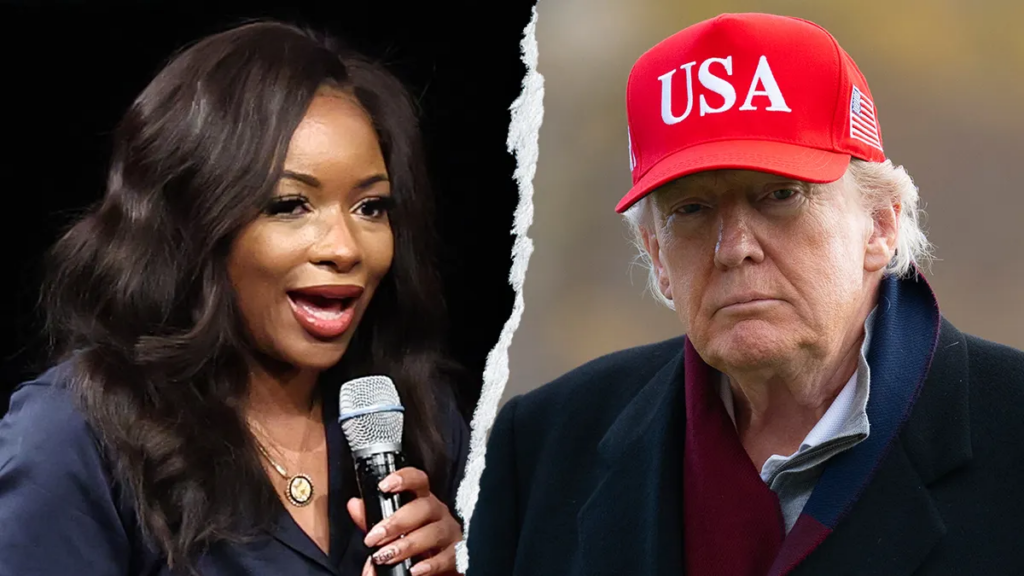
A fresh fight over federal money is opening on Capitol Hill. At the center of it is a new bill from Rep. Jasmine Crockett that aims to wall off a controversial Justice Department fund from some of the most politically explosive figures in the country.
What Crockett’s legislation is trying to do
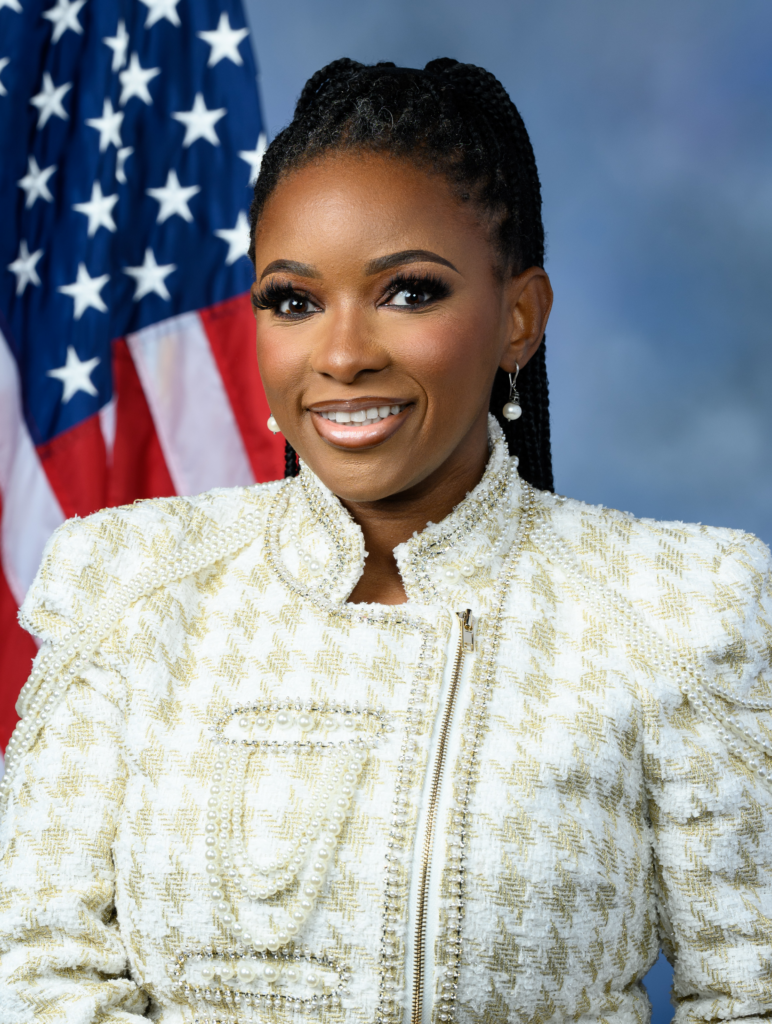
Crockett’s proposal is narrowly targeted but politically loaded. It seeks to block President Donald Trump, his political associates, and defendants tied to the January 6 attack on the U.S. Capitol from receiving money connected to a newly created $1.776 billion Department of Justice “Anti-Weaponization Fund.” In practical terms, the legislation is designed to stop any reimbursement, legal support, settlement payment, grant, or indirect financial benefit that could flow from that fund to people she argues should not be rewarded by a federal program created in the name of fairness.
The measure lands at a moment when “weaponization” has become one of Washington’s most contested terms. Republicans have used it to describe what they see as partisan investigations, prosecutions, and enforcement decisions across multiple federal agencies. Democrats, by contrast, have argued that the phrase is being turned into a political shield for allies of Trump and for people convicted or charged in connection with January 6. Crockett’s bill reflects that broader Democratic concern: that a fund presented as a corrective tool could instead become a vehicle for politically sympathetic payouts.
Although the exact administrative pathways tied to the fund will matter, the intent of the bill is clear. It tries to foreclose direct and indirect access, which is a critical distinction in federal appropriations law. Often, the biggest disputes over public money are not about plainly labeled checks, but about whether support can be routed through legal defense mechanisms, agency settlements, or affiliated entities. By writing the bill to cover Trump, allies, and January 6 defendants as categories, Crockett appears to be anticipating those loophole arguments before they arise.
The politics are just as important as the policy mechanics. Crockett has become one of the House Democrats’ most aggressive communicators on questions involving Trump, accountability, and institutional credibility. This legislation gives her a way to frame the issue in simple terms for the public: taxpayer dollars, she can argue, should not be used to underwrite people associated with efforts to overturn the 2020 election or to recast January 6 participants as victims entitled to federal relief. That message is likely to resonate strongly with Democratic voters even if the bill faces long odds in a divided and highly polarized Congress.
Why the $1.776 billion fund is drawing so much scrutiny
The size of the fund alone guarantees attention. At $1.776 billion, the DOJ “Anti-Weaponization Fund” is not a symbolic line item; it is large enough to shape major legal and administrative outcomes depending on how it is structured and administered. Whenever Congress or a federal agency creates a pool of money with a broad mission and a politically charged label, the immediate question becomes who qualifies, who decides, and what standards will govern access. Those are precisely the questions Crockett is forcing into the open.
The term “anti-weaponization” is itself doing a great deal of political work. Supporters of such framing suggest the government needs mechanisms to address abuses of prosecutorial or investigative power, especially in high-profile cases with electoral consequences. Critics warn that the same rhetoric can be used to delegitimize ordinary law enforcement, cast duly brought cases as conspiracies, and create pressure to compensate people based less on legal merit than on political identity. That tension is why even a fund with a seemingly corrective mission can become the center of a fierce legitimacy battle.The
January 6 defendants are a particularly volatile flashpoint in this debate. For Trump and many of his allies, some of those defendants have been recast as examples of overreach, selective punishment, or politically motivated prosecution. For Crockett and other Democrats, the idea that any federal money could touch that universe of cases is unacceptable, especially after years of evidence, court proceedings, convictions, and public reporting tied to the attack on the Capitol. In that sense, her legislation is not only about budget guardrails; it is about drawing a moral and constitutional line around a singular event in modern American history.
Trump’s presence makes the issue even more combustible. Any policy that intersects with his legal orbit immediately becomes a proxy fight over institutional trust, the rule of law, and the meaning of accountability in a polarized democracy. According to the way Crockett is framing the matter, allowing Trump or his circle to benefit from such a fund would send the message that political power can eventually convert legal jeopardy into public subsidy. Her bill is designed to stop that outcome before it becomes administratively possible, not after money has already moved.
What happens next and why the broader impact matters
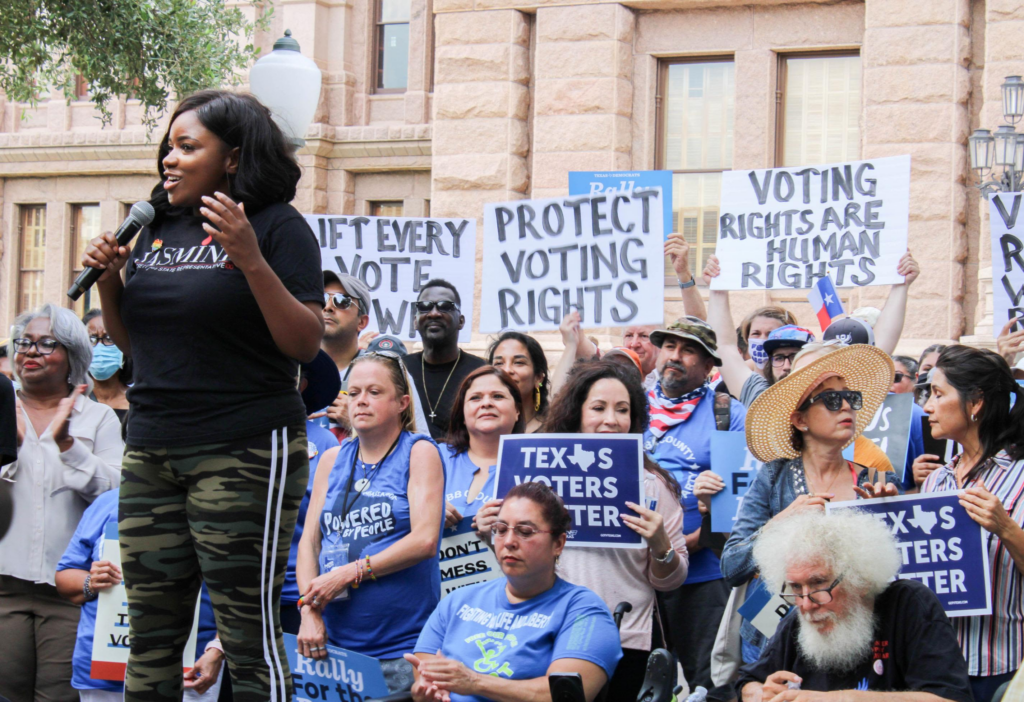
The immediate future of Crockett’s legislation will depend on committee handling, House leadership priorities, and whether Senate counterparts show any interest in a companion measure. Even if it does not become law quickly, bills like this often serve an agenda-setting purpose. They force agencies, appropriators, and political opponents to state publicly whether they believe any pathway should exist for Trump, his associates, or January 6 defendants to receive support from the fund. That alone can reshape the policy debate.
There is also a legal drafting question that will matter if the measure advances. To survive challenge and be enforceable, the bill would need to define covered individuals and covered benefits with precision. “Political allies” is an especially broad phrase in everyday speech, but legislation works best when categories are clear enough for agencies and courts to apply consistently. If the final language is too vague, opponents could attack it as arbitrary or difficult to administer. If it is too narrow, critics could say it leaves obvious escape routes.
Beyond the Capitol, the proposal speaks to a deeper conflict over whether government should ever create compensatory structures around alleged institutional bias in politically charged cases. Similar disputes have surfaced before in debates over civil settlements, wrongful prosecution claims, and victim compensation mechanisms, but this fight is distinctive because it sits directly inside the Trump era’s narrative war. Every dollar connected to the fund could be portrayed either as correcting abuse or as rewarding anti-democratic conduct, depending on who is telling the story. That is why the symbolism here is nearly as powerful as the budgetary stakes.
For Crockett, the bill is both a policy intervention and a political statement about democratic boundaries. She is betting that voters will understand the issue less as a technical appropriations dispute and more as a basic question of public principle: should taxpayer-backed justice money be available to people linked to efforts to challenge or disrupt the constitutional transfer of power? That framing ensures the debate will continue even if the legislation stalls. In Washington, some bills are written to pass. Others are written to define the argument, and this one is clearly trying to do both.