
A new antitrust fight is taking shape in Washington. This time, the focus is on whether fast-tracked corporate mergers from the Trump years should be pulled back apart.
Why lawmakers want a second look at Trump-era mergers
The proposed legislation is built on a simple claim: a number of major mergers approved or insufficiently challenged during the Trump administration deepened market concentration in ways that hurt consumers, workers, and smaller competitors. Supporters argue that enforcement agencies often accepted narrow definitions of harm, focused too heavily on short-term price effects, and underestimated how consolidation can weaken innovation, reduce supplier leverage, and shrink labor market competition. In their view, mergers that looked manageable on paper have, in practice, entrenched dominant firms across sectors from technology and telecommunications to health care, agriculture, and finance.
That argument reflects a broader evolution in antitrust thinking. For decades, regulators largely measured competitive harm through the consumer welfare lens, asking whether a deal would obviously raise prices. A growing number of legal scholars, state attorneys general, and federal officials now say that standard was too limited. They point to evidence that concentration can also produce slower product improvement, fewer choices, lower wages, and weaker resilience in supply chains. According to recent enforcement trends at the Federal Trade Commission and Justice Department, merger review has become more skeptical precisely because officials believe prior administrations, including the Trump administration, allowed problematic deals to proceed with modest conditions or no meaningful remedy.
Backers of the bill frequently cite the atmosphere of the late 2010s, when agencies were managing a high volume of dealmaking and often faced pressure to resolve cases quickly. Critics say some corporate combinations benefited from that environment, securing approval before regulators fully assessed long-term competitive effects. Several industries offer cautionary examples. In health care, hospital and insurer consolidation has repeatedly been linked by economists to higher costs and diminished bargaining power for patients and medical professionals. In agriculture, seed, chemical, and meat-processing concentration has raised recurring complaints from farmers who say they have fewer buyers and less negotiating strength. In media and telecom, consumer advocates have argued that larger firms gained leverage over distribution, advertising, and content markets in ways that were not fully anticipated.
The legislation would not automatically break up every deal from that period. Instead, it would create a structured review process for mergers cleared under standards lawmakers now believe were too permissive. That distinction is politically important. Supporters present the bill not as a radical attack on business scale, but as a corrective mechanism for transactions that may have escaped adequate scrutiny. The core message is that merger approval should not be treated as permanently untouchable when later evidence suggests the public paid the price.
What the new legislation would actually do
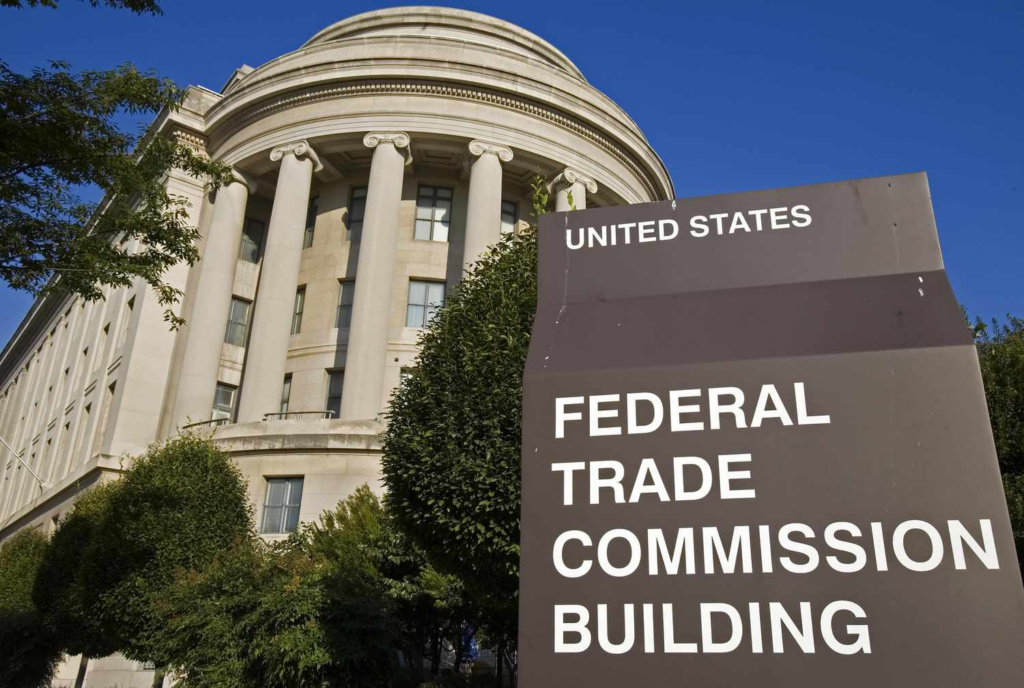
At the center of the proposal is a formal retrospective review regime. Federal antitrust agencies would be directed to identify a defined set of mergers completed during the Trump administration that involved highly concentrated markets, substantial vertical integration, or post-merger evidence of reduced competition. Rather than relying only on agency discretion, the legislation would establish criteria for reopening cases, timelines for preliminary findings, and reporting requirements to Congress. That matters because retrospective merger review has historically been sporadic, even though economists have long argued it is essential for understanding whether predictions made during merger approval were accurate.
The bill would also strengthen the legal tools available once a merger is flagged. Under current practice, unwinding a consummated deal is possible but difficult, both legally and practically. Courts often hesitate when businesses have already integrated operations, sold assets, or restructured markets around a transaction. The new legislation would lower some of those barriers by clarifying that post-consummation harms, including lower quality, suppressed wages, exclusionary contracting, or weakened entry conditions, can justify structural remedies. In the most serious cases, agencies could seek divestitures, operational separations, or full unwinding, especially where behavioral remedies failed or proved impossible to monitor.
Another significant feature is the shift in burden. For certain large transactions approved during the period under review, companies could be required to demonstrate that the merger has generated verifiable efficiencies without causing material competitive harm. That is a notable departure from the traditional posture in which government bears nearly the entire burden of proving illegality after a deal closes. Supporters say this is necessary because the firms involved control much of the relevant data, including pricing, output, employment, and internal strategy documents. Opponents, especially business groups, are likely to argue that such a standard undermines deal certainty and punishes companies for following the rules in place at the time.
The legislation is also expected to include funding provisions for economists, trial lawyers, and data specialists, an acknowledgment that unwinding large mergers is resource-intensive. Retrospective review is not just a legal exercise; it demands granular evidence on market shares, service quality, innovation, labor effects, and barriers to entry. Lawmakers pushing the bill have emphasized that antitrust enforcement cannot be credible if agencies lack the staff to challenge billion-dollar corporations with armies of consultants and outside counsel. In practical terms, the proposal is as much about state capacity as it is about legal doctrine.
The likely economic, legal, and political consequences
If enacted, the legislation could reshape corporate strategy well beyond the Trump-era deals it specifically targets. Boards and executives would have to account for a world in which merger approval does not end the matter, particularly in concentrated industries where long-term harms may emerge after integration. That could chill some transactions, but supporters say that outcome is not inherently negative. They argue that too much recent growth has come from acquisition rather than competition on quality, price, or innovation. A tougher retrospective standard, in their view, would push companies to invest more in organic expansion and less in buying rivals or critical suppliers.
The legal battle would be intense. Corporate defendants would almost certainly challenge the law on due process, retroactivity, and administrative fairness grounds, arguing that it changes the consequences of deals completed under earlier enforcement standards. Those arguments would not be trivial, especially if the statute appears to target a specific political period rather than setting a neutral rule for all retrospective review. To survive, the legislation would need to be carefully drafted around established antitrust principles, emphasizing ongoing market effects rather than punishing past conduct. Courts have long recognized the government’s interest in maintaining competitive markets, but they also weigh reliance interests heavily when businesses have already reorganized around an approved transaction.
Politically, the measure fits into a larger bipartisan unease with concentrated corporate power, even if the coalition behind it is uneasy and inconsistent. Progressive Democrats tend to frame the issue around consumer harm, labor power, and democracy, while some Republicans criticize consolidation as a threat to local business, free enterprise, and speech markets. Still, bipartisan concern does not guarantee bipartisan support for aggressive remedies. Many lawmakers remain wary of appearing hostile to business investment, and lobbying pressure from affected industries would be formidable. The bill’s prospects may therefore depend on how clearly sponsors can tie specific mergers to tangible harms felt by voters, such as higher medical bills, fewer broadband choices, weaker farm-gate prices, or reduced competition in essential services.
The broader significance of the proposal is that it rejects the idea that antitrust mistakes must simply be lived with. If lawmakers conclude that permissive merger policy allowed durable market distortions to take root, retrospective review becomes a way to restore competition rather than merely regulate its absence. Whether the bill passes or not, it signals a notable shift in U.S. economic policy: merger enforcement is no longer just about preventing the next bad deal, but about revisiting old ones that may have already reshaped the economy for the worse.