
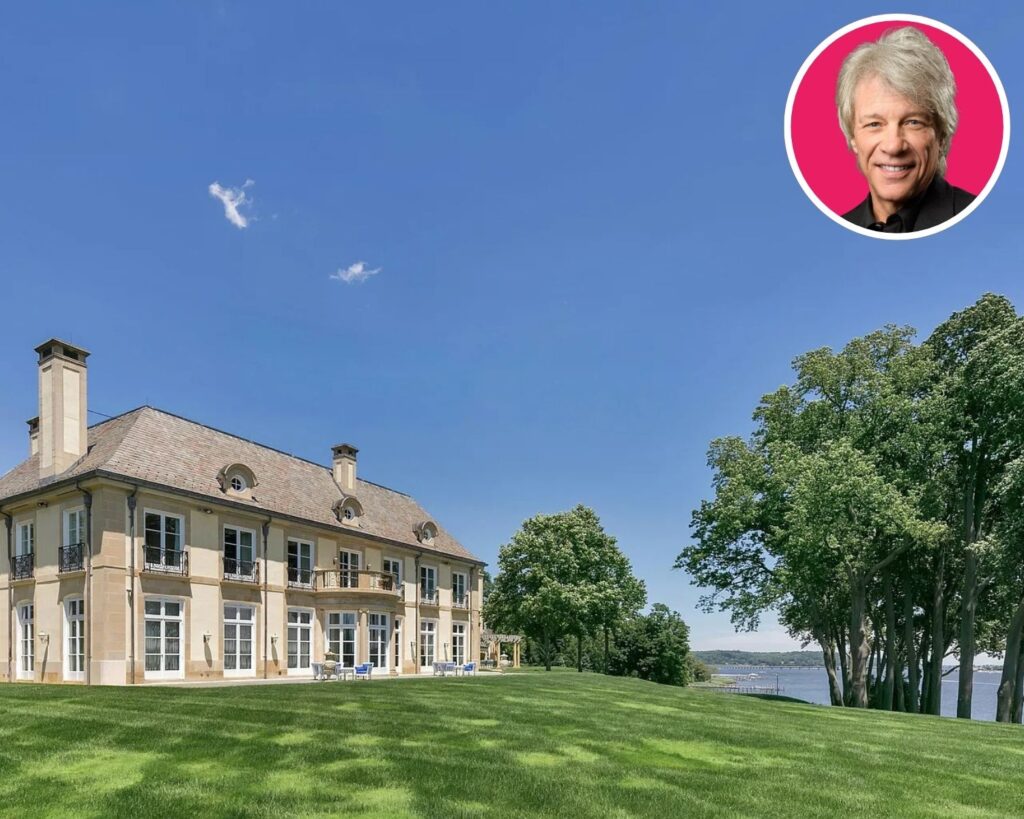
Before relocating to Palm Beach, rock legend Jon Bon Jovi lived in one of New Jersey’s most architecturally significant homes.
His former Middletown estate, known as High Point, was a 15-acre riverfront retreat modeled after a French château and designed by renowned architect Robert A. M. Stern.
The estate stood along the Navesink River, surrounded by manicured grounds originally conceived by the Olmsted Brothers—the celebrated landscape firm behind New York City’s Central Park.
More than a residence, it was an expression of Bon Jovi’s deep connection to New Jersey, blending artistic vision, craftsmanship, and community spirit.
A French Château on the Navesink River
Built in the late 1990s, High Point Estate embodied the elegance of French design and the warmth of a family home.
The main residence, crafted from stucco and limestone, was introduced by a sweeping gated drive that opened into brick courtyards, slate roofs, and historic wrought-iron details.
Its façade was defined by tall chimneys, arched alcove windows, and French balconies that captured river views from nearly every room.
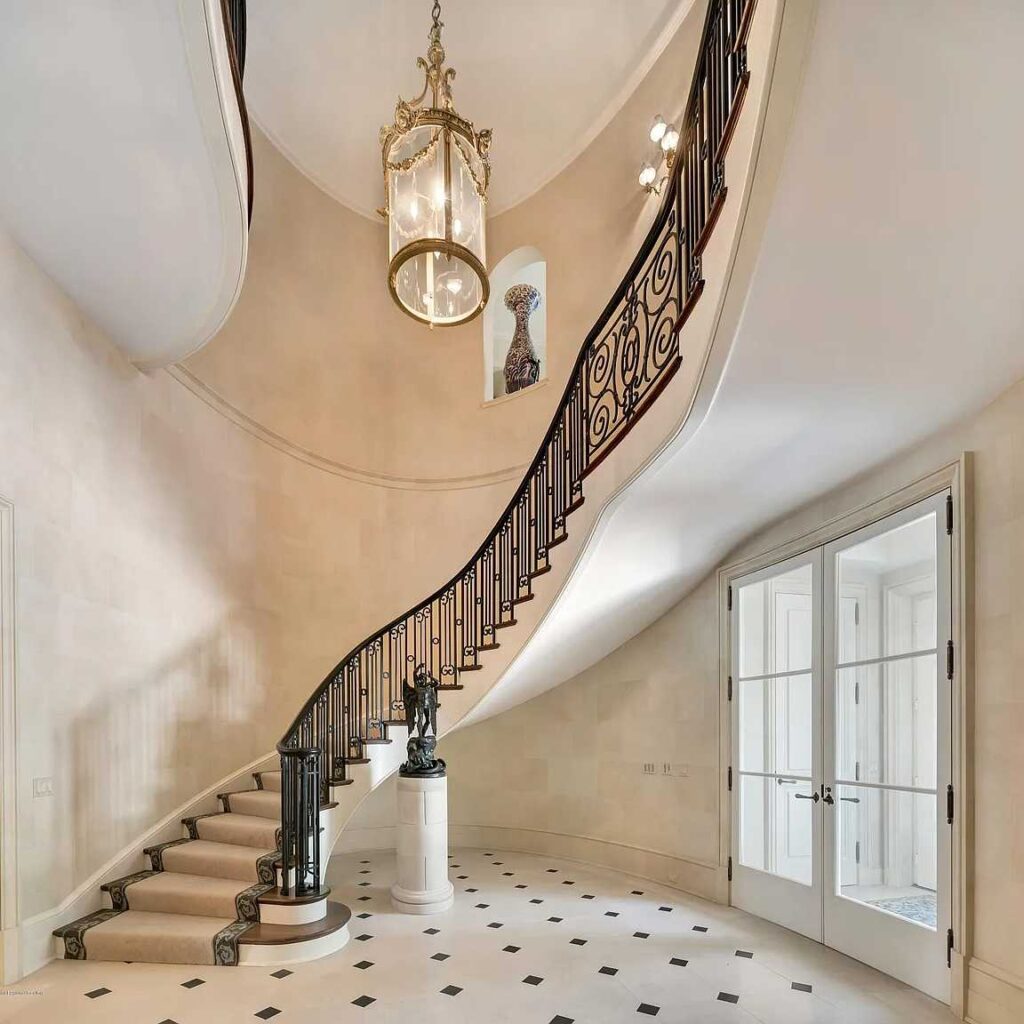
Inside, Stern’s design revealed a world of refined detail. A two-story foyer with a custom circular staircase and hand-forged iron banister set a tone of grandeur.
The interiors featured intricate plasterwork, parquet floors, and hand-painted finishes in 18th- and 19th-century patinas.
Expansive rooms flowed naturally from one to another—a 50-foot living room with a grand fireplace led to a bar framed by a large French mirror, while the formal dining room was designed to foster intimate conversation around a circular table.
Grounds That Echoed Grandeur
The estate’s landscape design—originally by the Olmsted Brothers—brought natural harmony to its architectural splendor.
Fifteen lush acres descended toward 700 feet of river frontage, surrounded by flowering gardens, stone pathways, and mature trees.
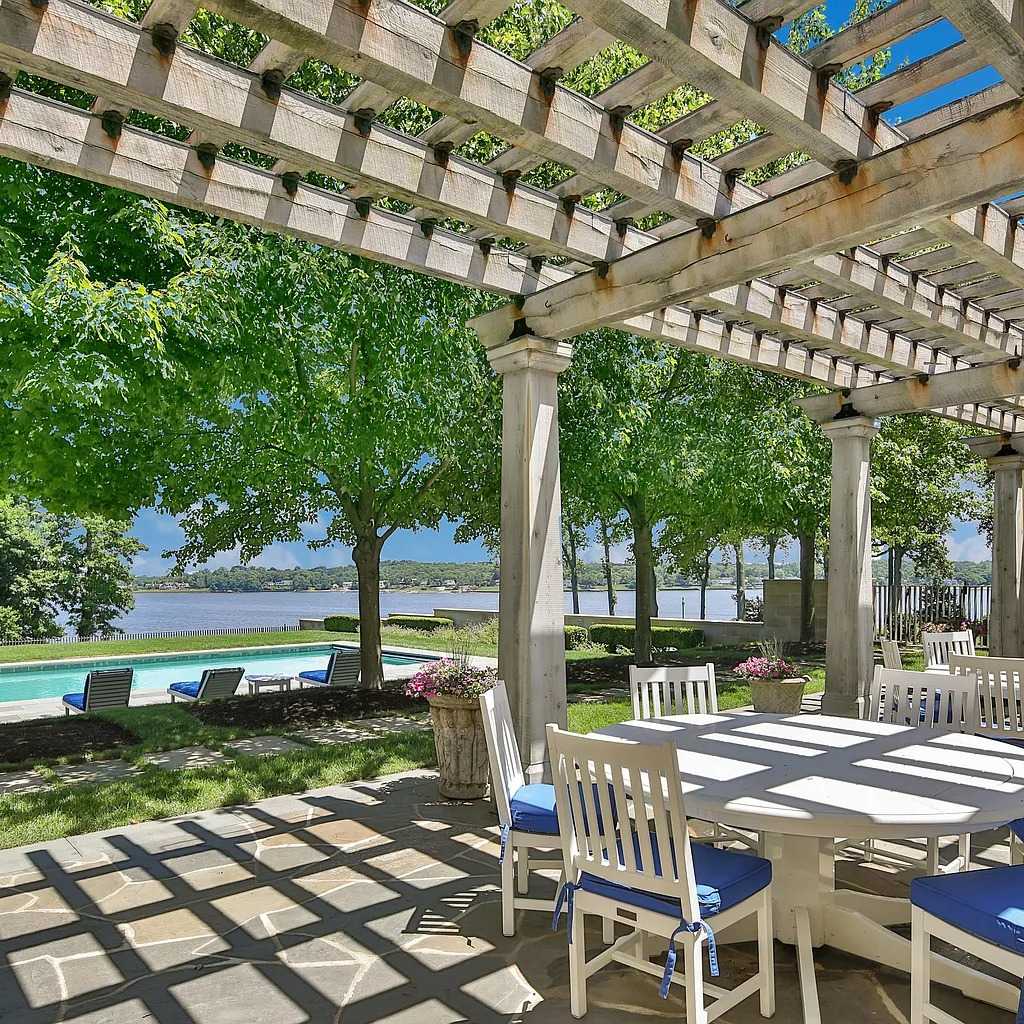
A courtyard framed by Renaissance-inspired gardens led to a serene swimming pool bordered by a slate patio, pergola, and cedar cabanas.
Additional structures dotted the property, each with a story of its own. A carriage house from 1910 was preserved with its original fireplace and full kitchen.
A recording studio, once used by Bon Jovi himself, was positioned above a row of seven garages, while a charming pub—nicknamed the “Shoe-Inn”—featured a bar imported from France.
These details revealed how High Point Estate was more than a home; it was a living reflection of creativity and craftsmanship.
a Picturesque Tour
Tree-lined cobblestone driveways frame the stately home’s front façade, where arched dormer windows and twin chimneys emphasize refined architectural balance and grace.
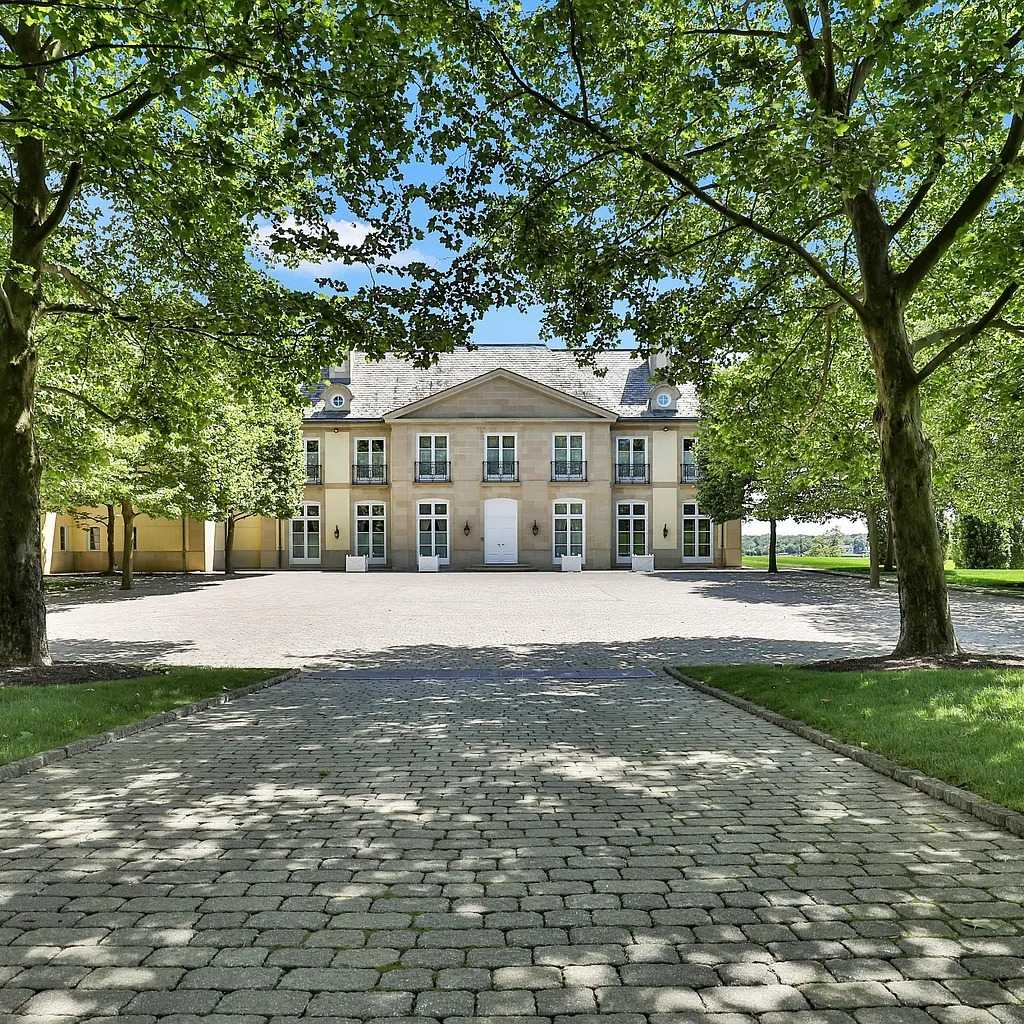
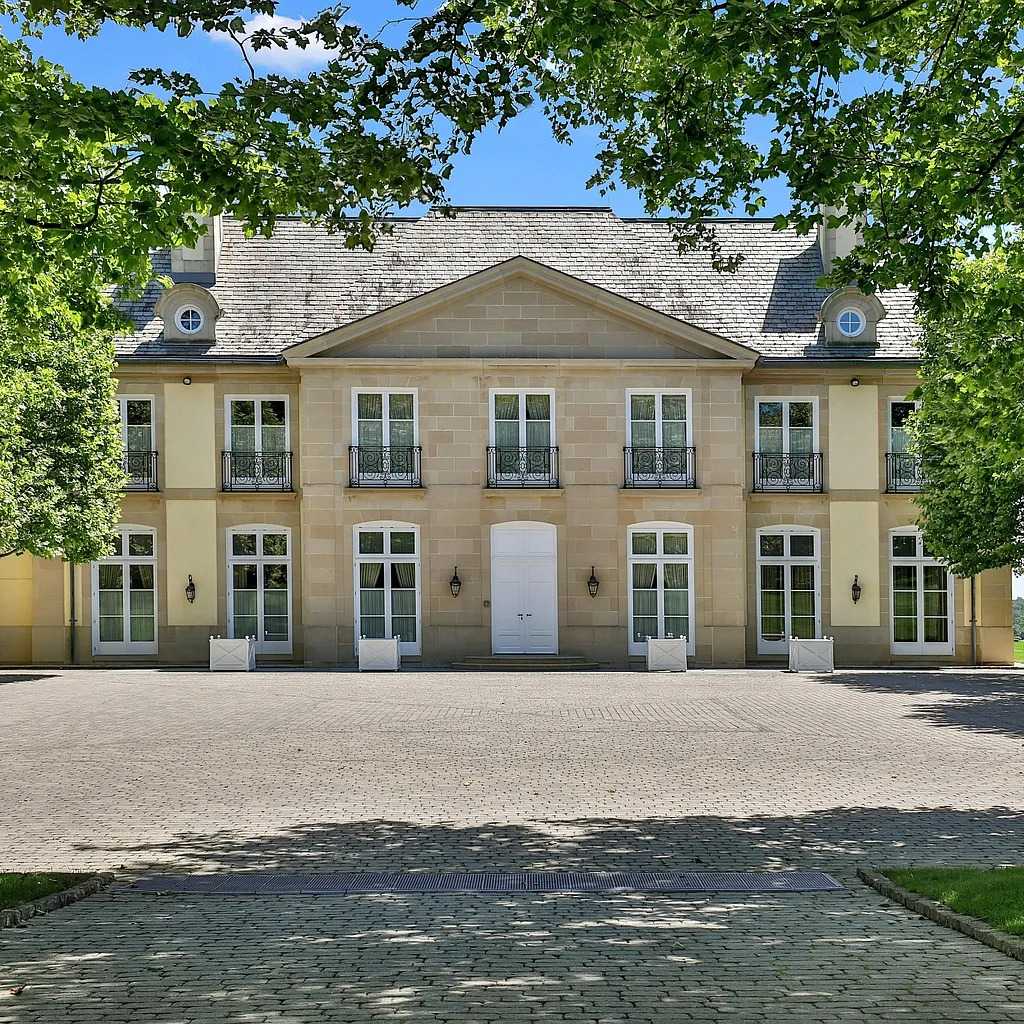
An impressive entryway reveals a symmetrical two-story exterior adorned with wrought-iron balconies, pale stone walls, and an inviting white double-door centerpiece.
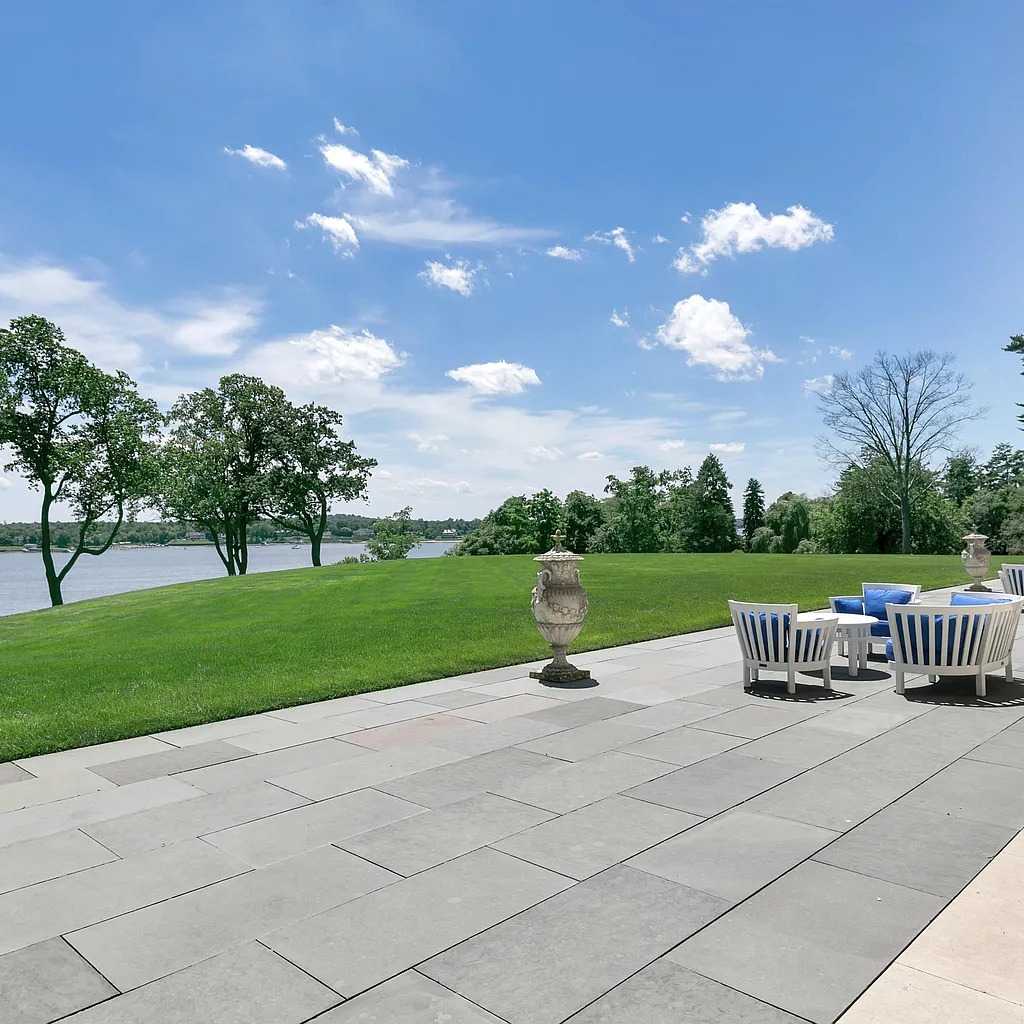
Expansive terraces overlook the river, with manicured green lawns and elegant urns complementing the serene outdoor seating that captures the tranquil waterfront breeze.
A shaded pergola shelters an outdoor dining area accented by white chairs and blue cushions, with views stretching over the sparkling pool and flowing river.
Curving upward in grandeur, a sweeping staircase crowned by a golden chandelier introduces the home’s lavish interior, blending classic artistry with contemporary refinement.
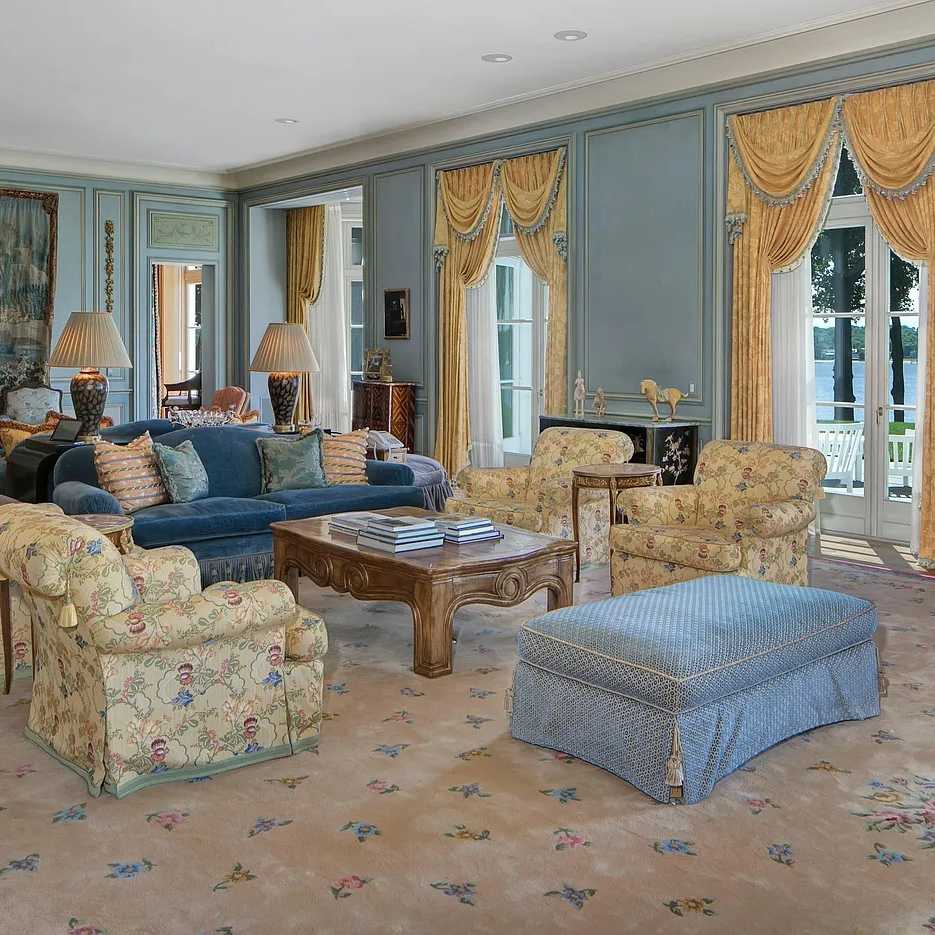
Velvet sofas and floral armchairs fill a regal living room, where ornate draperies and powder-blue paneled walls evoke the charm of an old European estate.
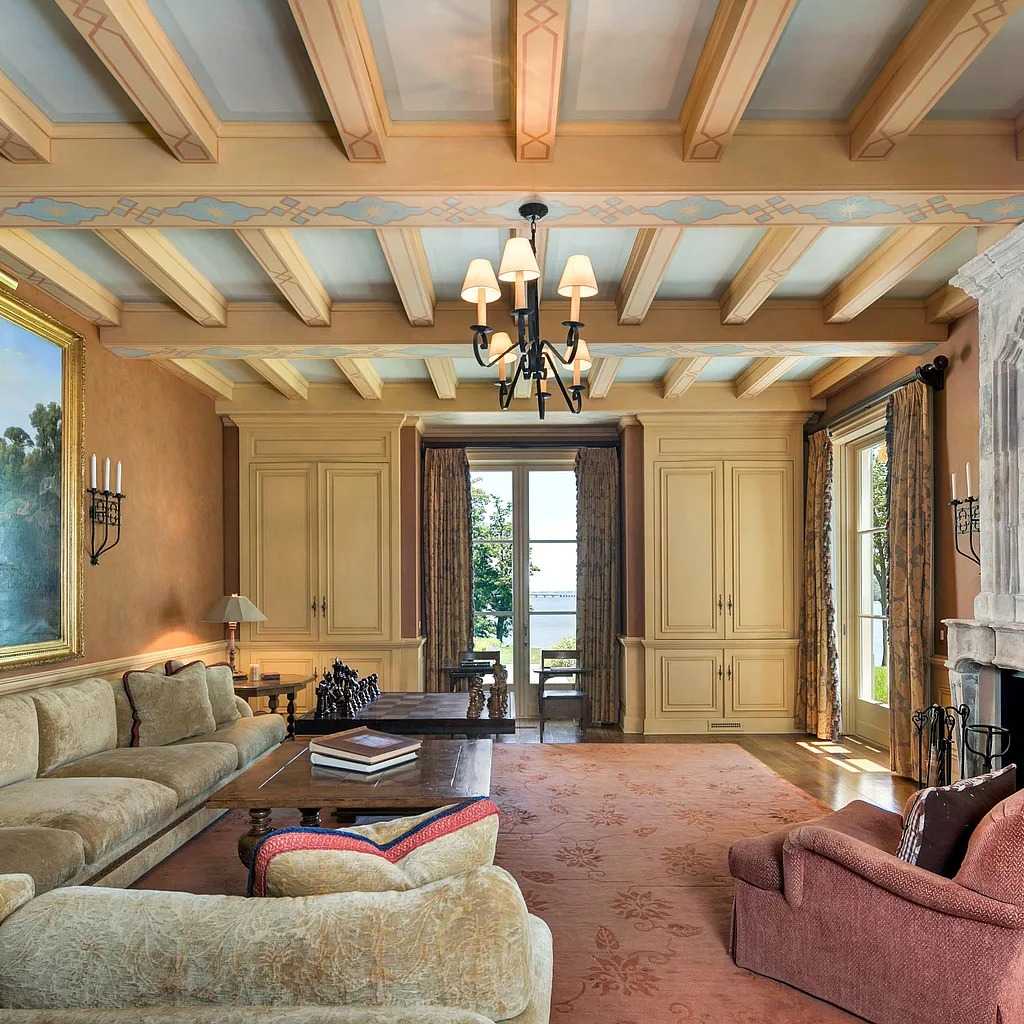
Sunlight pours into a coffered-ceiling sitting room adorned with soft beige furnishings, a rustic chandelier, and French doors opening toward riverfront vistas.
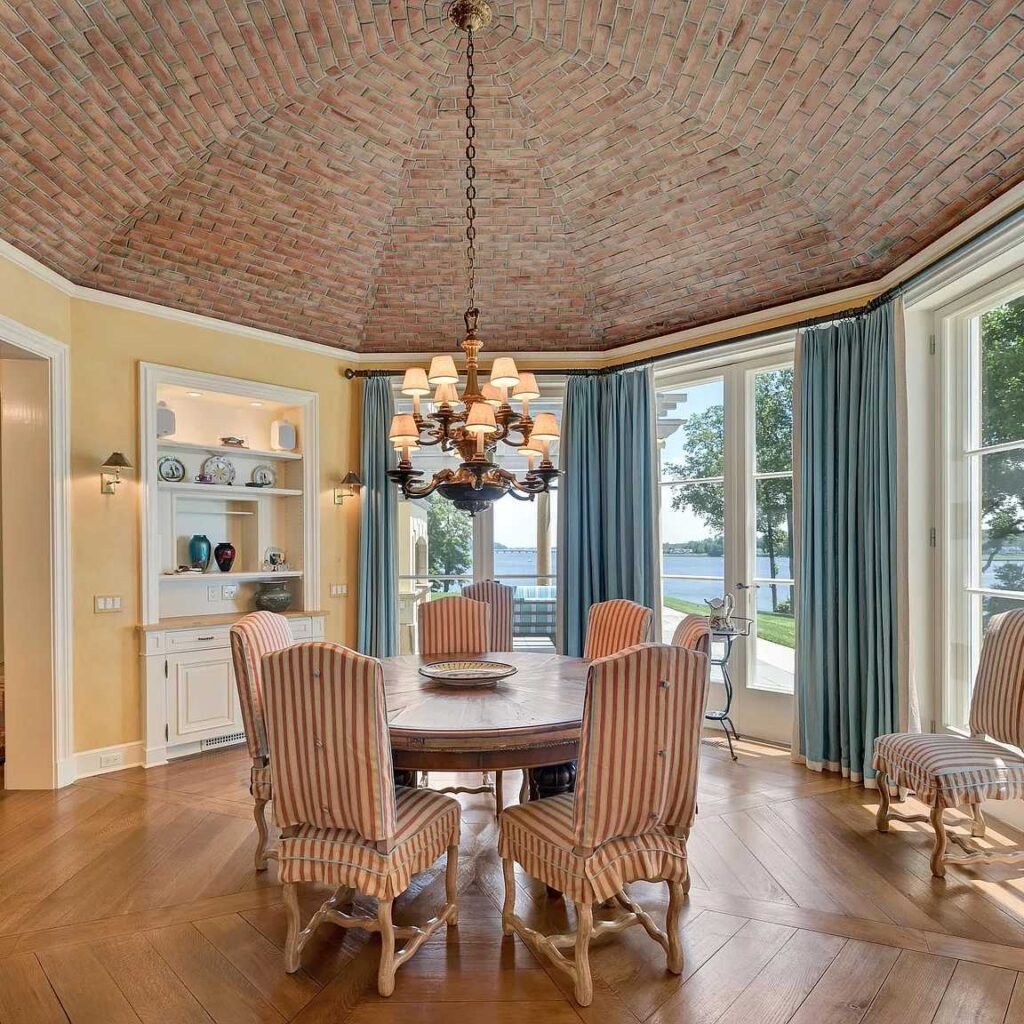
A round dining space gleams beneath a domed brick ceiling, with striped chairs circling a wooden table framed by tall windows overlooking the peaceful water.
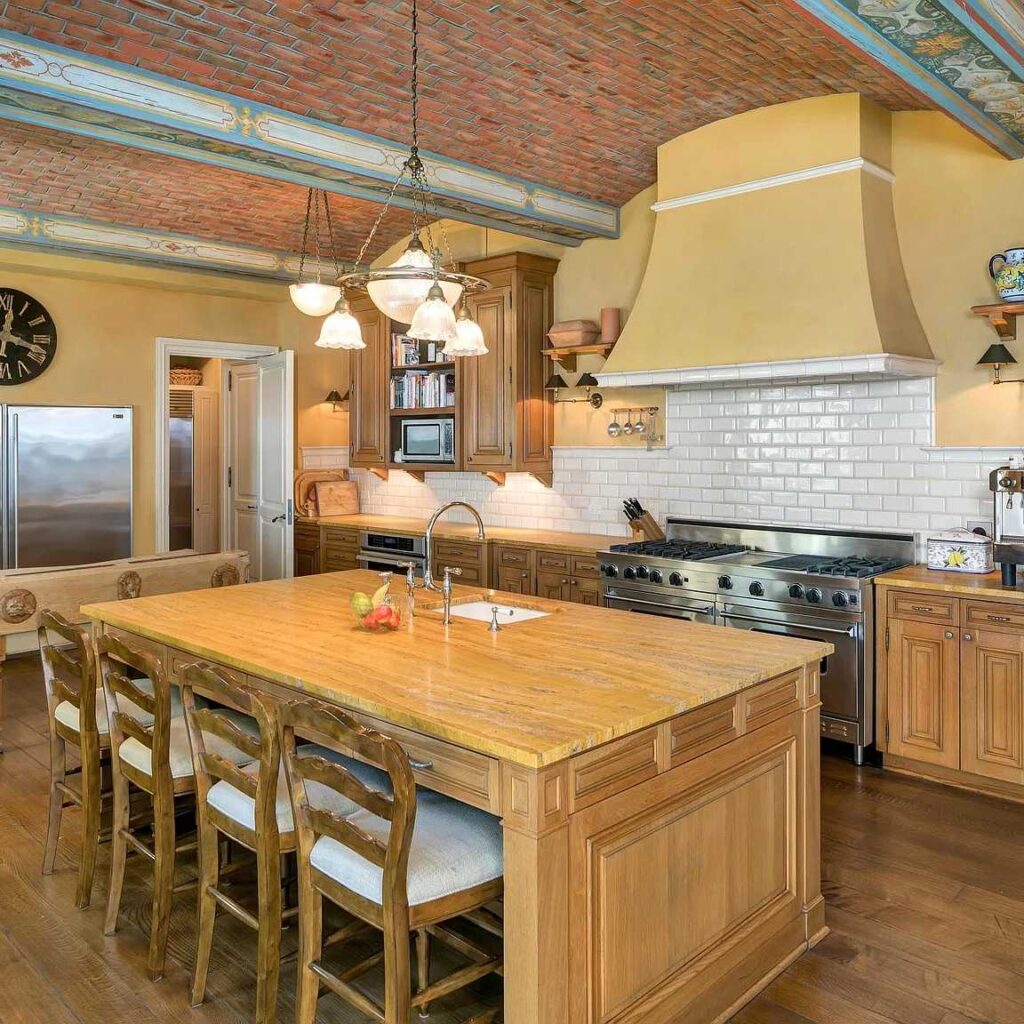
Warm tones define a gourmet kitchen featuring custom cabinetry, a grand island with seating, and a vaulted brick ceiling accentuated by hand-painted beams and pendant lighting.
A Legacy Rooted in Community
Though Bon Jovi eventually relocated to Florida, his connection to New Jersey remained profound.
Through the JBJ Soul Foundation and the JBJ Soul Kitchens in Red Bank, Toms River, and Newark, he continued to support affordable housing and hunger relief initiatives across the state.
The philanthropic mission mirrored the same spirit that shaped his home—a balance of artistry, generosity, and authenticity.
For over two decades, the estate served as both a private family haven and a celebration of Bon Jovi’s roots.
It was here that the musician and philanthropist raised his children, nurtured his artistry, and maintained a connection to the place that defined his beginnings.
Conclusion
Jon Bon Jovi’s former High Point Estate endures in memory as a masterpiece of architecture and heart.
Set high above the Navesink River, it reflected the dual legacy of a world-renowned musician and a devoted New Jersey son.
The home’s timeless elegance, its thoughtful design, and its enduring sense of place captured the essence of Bon Jovi himself—a blend of rock ’n’ roll spirit and refined authenticity that continues to resonate long after the music fades.