
The politics of industrial policy are colliding with the business of national security. A newly scrutinized Pentagon loan to a rare-earth magnet startup has become a test of where public interest ends and private influence begins.
How the Vulcan Elements loan became a political flashpoint
According to ProPublica, White House officials intervened in support of a $620 million Pentagon loan awarded to Vulcan Elements, a North Carolina startup focused on rare-earth magnets. On paper, the loan fits a broader national push to build domestic supply chains for materials that are essential to defense systems, electric vehicles, and advanced electronics. Rare-earth magnets are especially important because the United States has long depended heavily on overseas processing and manufacturing, with China dominating much of the global market. That strategic vulnerability has driven bipartisan interest in subsidizing domestic alternatives.
What transformed this financing decision into a political controversy was Vulcan Elements’ connection to Donald Trump Jr.’s investment firm, 1789 Capital. When a company tied to a politically prominent family receives unusually large federal backing, scrutiny is inevitable, even if the underlying industry is viewed as strategically important. The central question is not simply whether Vulcan Elements makes a product the Pentagon wants, but whether the normal safeguards around public financing were respected. ProPublica’s reporting suggests the White House did more than monitor a promising industrial project; it actively helped clear a path for a deal that might otherwise have faced tougher review.
That distinction matters because the Pentagon’s lending and grant-making programs are meant to support national capability, not reward political proximity. A $620 million commitment is not a routine award for an early-stage manufacturer, particularly in a sector where commercialization risks remain high, and project timelines can slip for years. Supporters of the loan can point to a real strategic problem: the United States needs domestic magnet production if it wants to reduce dependence on foreign suppliers. Critics, however, argue that even worthwhile policy goals can be undermined if officials appear to steer benefits toward insiders.
The episode lands at a moment when Washington has embraced a far more activist role in industrial development. In recent years, the federal government has directed massive sums toward semiconductors, batteries, clean energy, and critical minerals. Those investments have created opportunities for genuine economic renewal, but they have also increased the value of political access. The Vulcan Elements case shows how quickly a national security rationale can become entangled with ethics concerns when large sums, emerging technologies, and well-connected investors meet behind closed doors.
Why rare-earth magnets matter so much to the Pentagon
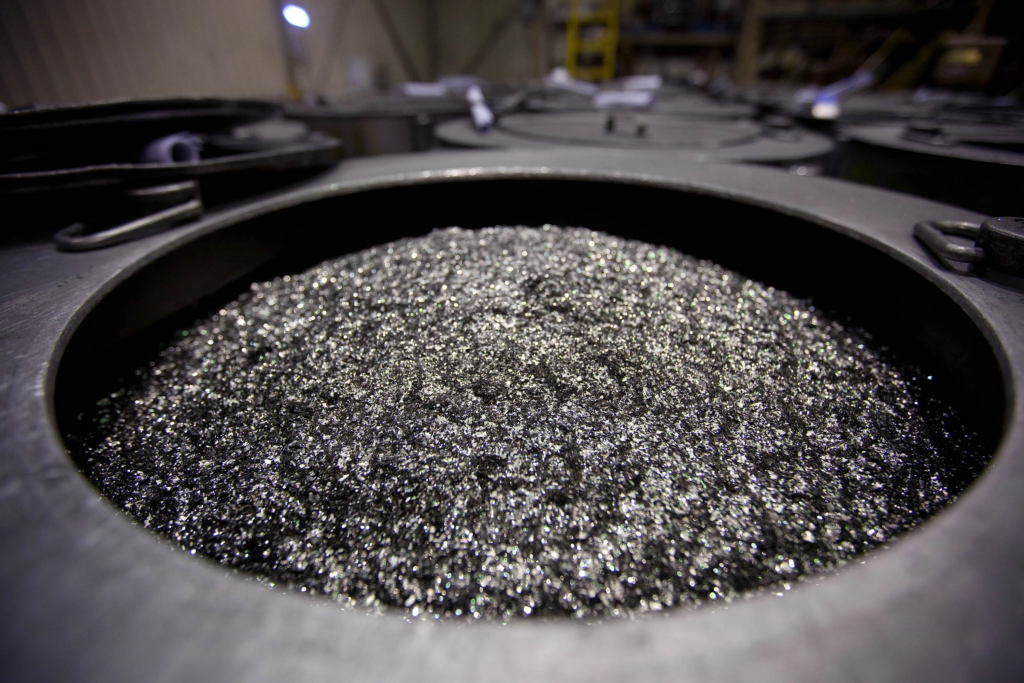
Rare-earth magnets may sound obscure, but they are embedded in some of the most important technologies in modern life. High-performance permanent magnets are used in fighter aircraft, guided munitions, missile systems, submarines, radar, wind turbines, and electric motors. For defense planners, the issue is not merely price; it is resilience. If geopolitical tensions disrupt access to foreign-made magnets or their upstream materials, the Pentagon could face supply bottlenecks in programs that are already expensive and delayed.
This is why federal officials have spent years searching for ways to encourage domestic production. Mining rare-earth elements is only one part of the challenge. The harder problem often lies in processing, separation, alloying, and magnet manufacturing, where China has built enormous scale and expertise. American policymakers have repeatedly warned that without a full supply chain at home or among close allies, the United States remains exposed. In that context, a company such as Vulcan Elements can present itself as more than a startup; it can frame its business plan as a strategic asset.
Still, strategic importance does not erase commercial reality. Building a competitive rare-earth magnet operation in the United States requires huge upfront capital, long lead times, environmental approvals, technical know-how, and guaranteed customers. Many industrial startups promise to close critical gaps, but not all survive the journey from announcement to full-scale production. That is why due diligence is so important when taxpayers are effectively underwriting risk. Government support can catalyze a new industry, yet it can also lock in losses if financing decisions rest on optimism, political pressure, or inadequate review.
There is also a broader policy tension at work. If Washington waits for a fully mature private market, domestic production may never develop because foreign competitors already enjoy scale and state support. But if the government moves too aggressively, it can end up picking winners based on lobbying strength rather than operational merit. The ideal model is disciplined intervention: clear strategic criteria, transparent process, conflict checks, and measurable milestones. The allegations surrounding Vulcan Elements have gained traction precisely because they suggest those boundaries may have blurred in a sector where the stakes are unusually high.
The deeper ethics and governance questions ahead

The most consequential issue raised by ProPublica’s reporting is not limited to one company or one loan. It is whether the expanding machinery of federal industrial policy has developed strong enough guardrails to withstand political favoritism. Once Washington starts channeling billions into strategically chosen sectors, the risk of influence-seeking rises sharply. Investors, founders, lobbyists, and politically connected intermediaries all understand that one meeting or one supportive call from senior officials can shape the fate of a project. That makes process integrity as important as policy ambition.
For the White House, any appearance of intervention on behalf of a firm tied to Donald Trump Jr.’s investment orbit is especially combustible. Even if officials believed they were advancing a legitimate national security objective, the optics are damaging because they invite comparisons to the very pay-to-play concerns that administrations often condemn in rivals. Ethics experts generally focus on disclosure, recusal, independent review, and documentation for exactly this reason. The public does not just need assurances that decisions were justified; it needs confidence that they were insulated from political relationships in the first place.
The Pentagon, meanwhile, faces its own credibility test. Defense officials routinely argue that strengthening domestic supply chains requires speed and flexibility because adversaries are not waiting for bureaucratic perfection. That argument is compelling, but it cannot become a blanket excuse for opaque decision-making. Programs involving strategic materials, defense technology, and large-scale lending should be able to show why one company was chosen over another, what milestones must be met, and what happens if a project underperforms. Accountability is not a brake on national security policy; it is what gives that policy democratic legitimacy.
The Vulcan Elements controversy is likely to resonate beyond this single transaction because it sits at the intersection of several powerful trends: the reshoring of critical industry, the politicization of corporate finance, and the normalization of aggressive state intervention in private markets. If ProPublica’s findings trigger congressional review or internal audits, the outcome could shape how future defense-backed loans are structured and monitored. At stake is more than one startup’s prospects. The larger question is whether America can rebuild strategic manufacturing capacity without allowing public money to become another instrument of insider advantage.